FEATURED: THE FUTURE OF PROPERTY MANAGEMENT IS AI
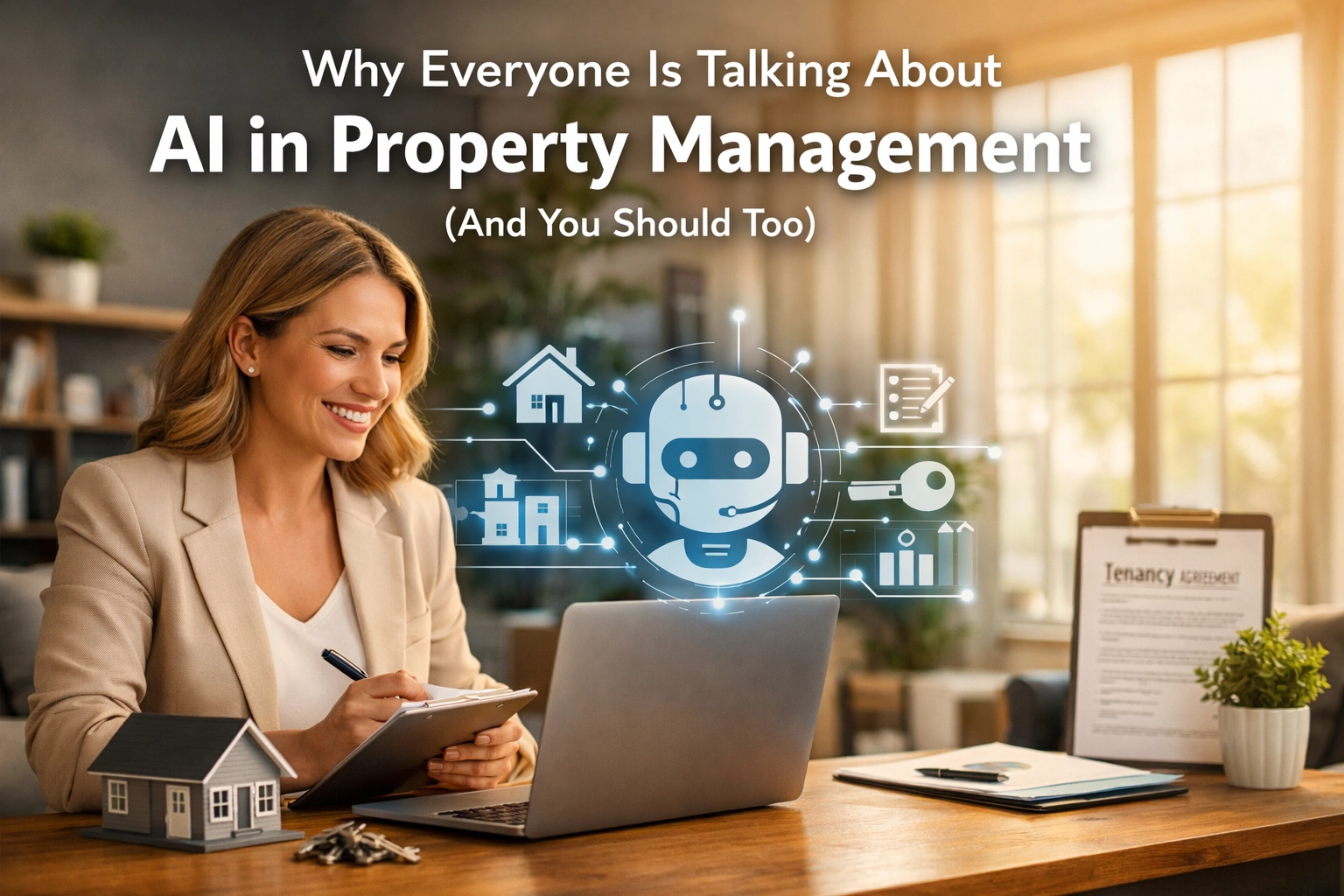
Why Everyone Is Talking About AI in Property Management (And You Should Too)
Artificial intelligence has shifted from experimental technology to operational necessity in the multifamily property management sector. Property owners and investors who implement AI-driven systems today gain measurable competitive advantages in efficiency, tenant retention, and portfolio performance. The numbers tell a compelling story: 77% of operators using AI report moderate to significant reductions in operating expenses, while 85% have documented measurable improvements in lead-to-lease conversion rates.
The conversation around AI in property management centers on tangible results rather than theoretical potential. Major platforms saved onsite teams over 10.8 million hours in 2025 alone through automated leasing workflows and intelligent tenant communication systems. These efficiency gains translate directly to improved net operating income and enhanced asset value for multifamily portfolios.
The Operational Efficiency Revolution
AI transforms the most time-intensive aspects of apartment property management through intelligent automation. Document management represents one of the highest-impact applications. Lease agreements, compliance records, maintenance logs, and renewal notices flow through multifamily operations daily. AI systems automatically classify, store, and flag documents requiring immediate action, eliminating hours of administrative work per property per week.

Tenant communication automation delivers immediate ROI through 24/7 availability and instant response capabilities. AI-powered chatbots handle routine inquiries about lease terms, amenity reservations, and maintenance requests without human intervention. Case studies demonstrate inquiry response times decreasing by over 60% while tenant satisfaction scores increase, creating a dual benefit of reduced labor costs and improved resident experience.
This operational foundation allows property management teams to focus on strategic initiatives rather than routine administrative tasks. Equity Real Estate Management integrates these intelligent systems across portfolio operations, ensuring consistent service delivery while maximizing team productivity.
Predictive Capabilities That Protect Asset Value
The integration of IoT sensors with AI analytics enables predictive maintenance strategies that prevent costly emergency repairs. AI systems monitor HVAC performance, elevator operations, and critical building utilities in real-time, identifying anomalies that signal impending equipment failure. Property managers receive alerts days or weeks before breakdowns occur, allowing scheduled maintenance that costs significantly less than emergency service calls.
Predictive maintenance protects both asset value and tenant experience. Unplanned downtime for elevators or climate control systems creates immediate dissatisfaction among residents and potential lease non-renewals. AI-driven monitoring eliminates most emergency situations through proactive intervention, maintaining the consistent living experience that drives retention rates.
Revenue optimization through dynamic pricing represents another high-value predictive application. AI algorithms analyze occupancy trends, competitor pricing, seasonal demand patterns, and local market conditions to recommend optimal rental rates for each unit type. This data-driven approach increases rental income without sacrificing occupancy levels, improving overall portfolio yield.

Document Intelligence and Compliance Automation
Multifamily property management companies face extensive regulatory compliance requirements across fair housing laws, safety codes, and lease documentation standards. AI systems continuously monitor changing regulations and automatically flag potential compliance gaps before they become violations. This proactive approach protects property owners from costly legal exposure while reducing the manual effort required for compliance auditing.
Lease renewal processes benefit significantly from AI automation. Systems analyze lease expiration dates, tenant payment history, and maintenance request patterns to identify optimal renewal candidates. Automated communication workflows begin the renewal conversation at precisely the right moment, using personalized messaging that increases conversion rates. Property managers receive prioritized lists of renewal opportunities ranked by probability of success, enabling focused outreach efforts.
Contract analysis capabilities extend beyond leases to vendor agreements and service contracts. AI reviews terms, identifies renewal dates, and flags pricing changes or unfavorable clauses that require renegotiation. This comprehensive contract intelligence ensures property owners maintain favorable vendor relationships while controlling operating costs.
The Competitive Advantage of Early Adoption
Property owners who implement AI capabilities now establish operational advantages that competitors will struggle to match. The learning period for AI systems means early adopters build increasingly sophisticated models tuned specifically to their portfolio characteristics. These proprietary insights become valuable competitive moats as the technology matures.

Integration depth determines AI effectiveness. Systems that connect seamlessly with existing property management platforms like Yardi, MRI, or Re-Leased deliver substantially higher ROI than standalone point solutions. Equity Real Estate Management prioritizes deep platform integration to ensure AI capabilities enhance rather than complicate existing workflows.
The talent advantage matters equally. Property management companies developing AI expertise within their teams create institutional knowledge that accelerates innovation adoption. Training staff to work alongside intelligent systems positions organizations for continued technology evolution rather than reactive scrambling as capabilities advance.
How Equity Real Estate Management Leverages AI Technology
Equity Real Estate Management implements AI across three core operational areas: tenant experience, asset performance monitoring, and administrative efficiency. Intelligent communication systems handle initial prospect inquiries, schedule property tours, and answer routine questions without human intervention. This 24/7 availability improves conversion rates while allowing leasing teams to focus on personalized closing conversations with qualified prospects.
Asset performance monitoring integrates sensor data from HVAC systems, water detection devices, and access control systems into unified dashboards. Predictive algorithms identify maintenance needs before they impact residents, reducing emergency service costs and improving tenant satisfaction scores. Portfolio managers receive automated alerts when properties deviate from performance benchmarks, enabling rapid intervention.
Administrative workflow automation eliminates repetitive tasks across lease processing, vendor invoice management, and compliance documentation. AI systems route documents to appropriate team members, flag missing information, and track completion status without manual oversight. This automation infrastructure allows Equity Real Estate Management to scale operations efficiently while maintaining service quality standards.
Interested in how AI-enhanced multifamily property management can improve your portfolio performance? Contact Equity Real Estate Management to discuss technology-driven property management solutions.
The Evolution Ahead: What’s Coming Next
Natural language processing advances will transform how property managers interact with data. Instead of generating reports through complex software interfaces, managers will simply ask questions in plain English and receive instant analytical responses. This democratization of data access enables faster decision-making at all organizational levels.
Computer vision applications will revolutionize property inspections and maintenance verification. AI systems analyzing photos from routine unit walks will identify maintenance issues human eyes might miss, from early water damage to HVAC filter replacement needs. This technology improves preventive maintenance programs while creating objective documentation of property conditions.
Tenant behavior prediction models will enable hyper-personalized retention strategies. By analyzing payment patterns, amenity usage, and service request history, AI will identify residents at risk of non-renewal months in advance. Property managers can then implement targeted retention initiatives for high-value tenants while making strategic decisions about marketing timing for anticipated vacancies.
The Integration Imperative
Successful AI implementation requires thoughtful integration with existing property management infrastructure. Standalone AI tools create data silos and workflow friction that negate efficiency gains. Property owners should prioritize solutions that enhance current platforms rather than replacing proven systems.
Change management represents the often-overlooked success factor in AI adoption. Property management teams need training not just on software operation but on collaborating effectively with intelligent systems. The most successful implementations treat AI as a team member that handles specific tasks while human expertise focuses on relationship building and strategic decision-making.
Data quality determines AI effectiveness. Systems trained on incomplete or inaccurate information produce unreliable insights. Multifamily property management companies must invest in data hygiene practices alongside AI deployment to ensure algorithms access the clean, comprehensive information required for accurate predictions and recommendations.

The conversation around AI in property management has evolved from theoretical potential to documented performance improvement. Property owners who view AI as a strategic capability rather than a technology experiment position their portfolios for sustained competitive advantage. The efficiency gains, predictive capabilities, and operational improvements delivered by intelligent systems directly impact profitability and asset value.
Equity Real Estate Management continues investing in AI capabilities that enhance service delivery across multifamily portfolios in Texas, Louisiana, Oklahoma, and South Dakota. These technology implementations complement the expertise and relationship focus that define professional property management, creating a powerful combination of human judgment and machine intelligence that maximizes property performance.
Leave A Comment
You must be logged in to post a comment.